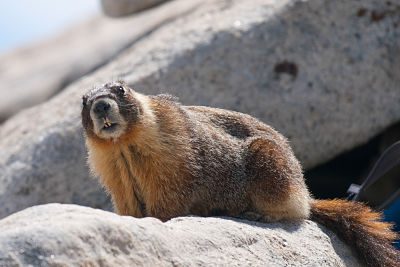
What are rock chucks?
Rock chucks are Idaho’s name for the yellow-bellied marmot (Marmota flaviventris), a large ground squirrel found throughout the state’s rocky slopes, talus fields, foothill lots, and irrigation canal banks. They’re sometimes called “whistle pigs,” though that nickname is technically reserved — Idaho Fish and Game officially designates the Piute ground squirrel as the state’s true whistle pig. Rock chucks earn it anyway: when a predator (or a person) gets too close, one will let out a sharp warning whistle and the whole colony bolts underground.
In the Treasure Valley, rock chucks are most likely to show up on properties backing to open hillsides or undeveloped lots with rock piles and slopes nearby — exactly the cover they prefer for denning.
What do they eat?
Rock chucks are primarily herbivores, grazing on grasses, clover, alfalfa, and garden plants — including the flowers and vegetables you’ve spent all season growing. They’ll opportunistically eat grasshoppers and bird eggs when they come across them, but plant material makes up the bulk of their diet. The damage homeowners notice is almost always grazing damage: a yard or garden bed stripped down faster than it should be.
How big do they get, and how do they burrow?
Rock chucks weigh 5 to 11 lbs, with males running heavier than females and the heaviest weights showing up in late summer and fall, right before hibernation. They’re serious diggers — a single burrow system can run 12 inches across at the entrance and extend up to 15 feet underground, sometimes branching into multiple chambers. Colonies of up to 20 rock chucks can share a network of burrows, which is part of why an unmanaged population on a property tends to get worse, not better, year over year.
When are they active?
Rock chucks spend roughly eight months of the year hibernating underground, typically from early fall through late winter. They emerge in spring — usually February through April depending on elevation — mate shortly after waking up, and give birth about 30 days later to litters of 3 to 8 pups. This makes spring the best window to catch and address an infestation early, before a season of grazing and burrowing adds up and before the colony’s litter adds more mouths to feed.
What can be done about them?
Once rock chucks settle into a burrow system, they don’t relocate on their own — they’ll keep feeding on your landscaping and expanding their tunnels season after season. Live trapping is the most effective and humane way to remove them, and it’s what we use at Barrier Pest Control. We identify active burrows, set traps, and safely remove the animals from your property.
The earlier you call, the less damage there is to undo — especially if you catch activity in spring before a colony settles in for the season. If you’re in the Treasure Valley and seeing fresh burrow mounds or grazing damage, call us at 208-463-4533 or contact us here.
Frequently asked questions
Are rock chucks dangerous to people or pets?
Rock chucks aren’t aggressive and won’t seek out confrontation, but like any wild rodent they can bite if cornered or handled. The bigger risk is usually structural — their burrows can undermine sheds, foundations, and walkways.
What’s the difference between a rock chuck and a groundhog?
They’re closely related — both are large ground squirrels in the marmot family — but rock chucks (yellow-bellied marmots) are the species found in Idaho’s rocky, semi-arid terrain, while groundhogs are a separate species found in the eastern and midwestern U.S.
Can I get rid of rock chucks myself?
DIY methods like fencing or repellents have limited success once a colony is established, since rock chucks dig extensive burrow networks that are hard to fully address without professional trapping equipment and experience.